This post is based on animation interviews and journals I read from Zippy Frames and Skwigly. I grew up watching and learning about 2D animation, so I have a good basic understanding of it. However, I did not know much about stop-motion animation before. I slowly became interested in stop-motion and learned related skills through my Unit 2 study. Therefore, this secondary research helps me learn more about the real stop-motion animation industry and freelance stop-motion creators’ working situations.
From these readings, I found many practical difficulties for independent stop-motion animators. Many creators struggle to get funding for their projects. Without enough financial support, it is hard for them to find suitable shooting places, professional equipment and production materials. For example, German animator Marcus Grysczok finished his stop-motion works with the help of studio equipment from his university, because independent creators lack personal professional production conditions.
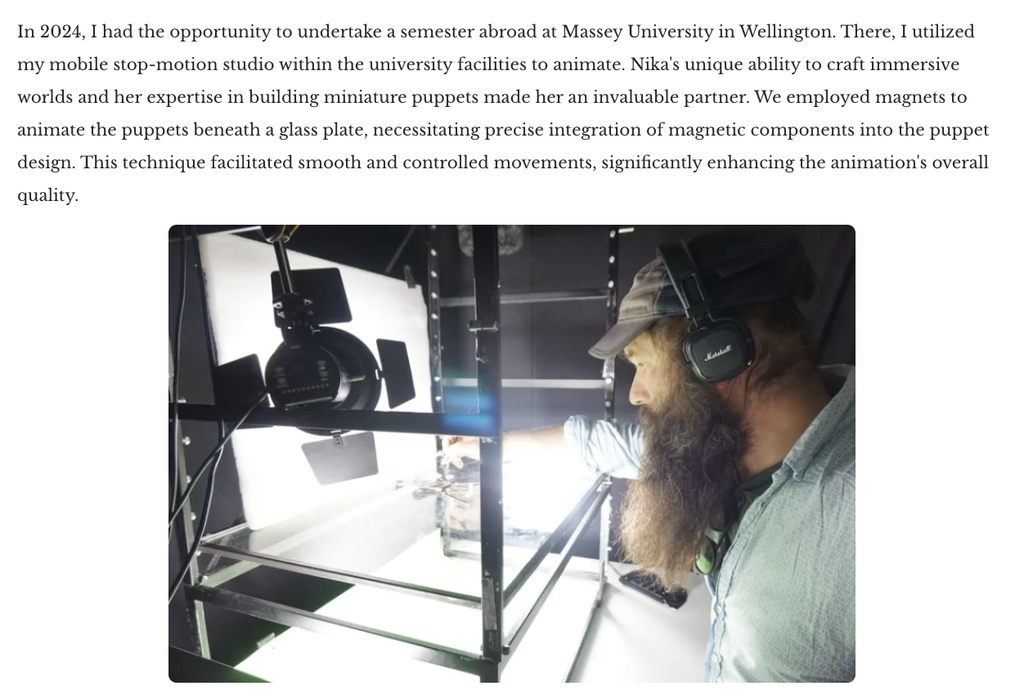
The section about the production space in the interview for Perfect Sense by Marcus Grysczok
So I think getting funding is also an important skill. With enough funding, many practical problems can be solved easily.
In addition, Marcus Grysczok mentioned that his personal animation style was formed through continuous experimentation and gradual exploration, not built in a short time. This matches Sacha’s idea in Post 2, which means a unique personal art style needs long-term creation and practice. I also gained new inspiration from artist Katie King’s work. She believes animation materials such as fabric can become part of the story. These special materials carry unique emotions and memories, and help creators enrich the theme of their works.
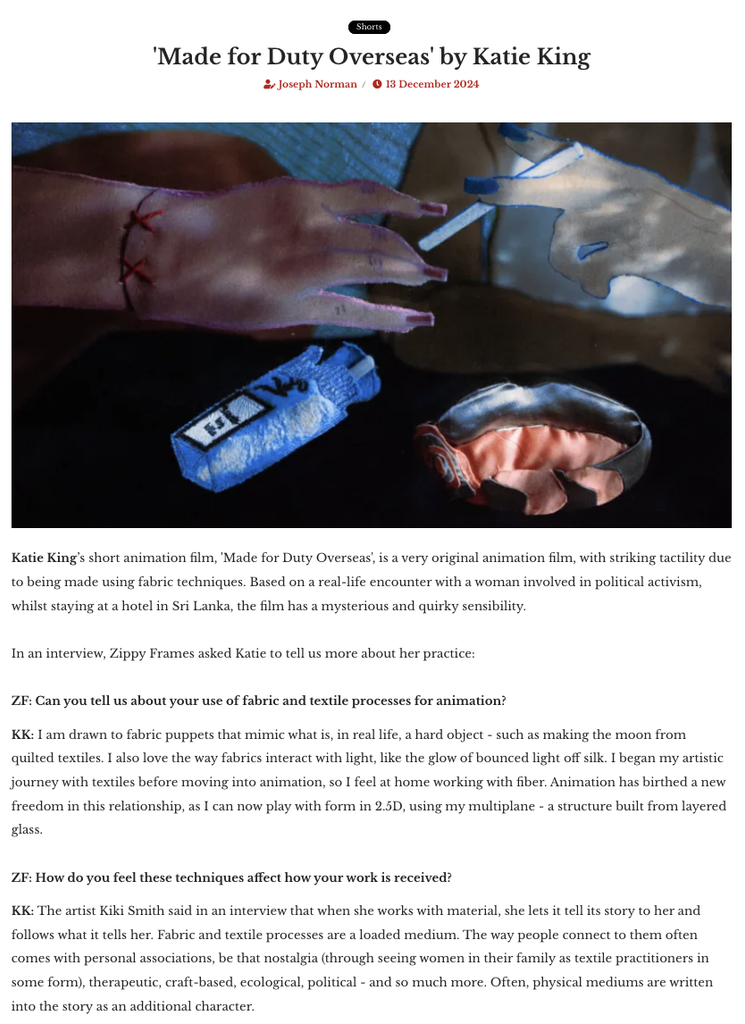
The section about material usage in the interview for Made for Duty Overseas by Katie King
Focusing on combining materials with animation. This is something I’ve been interested in since I started stop-motion.
Moreover, according to the interview with animator Bianca Ansems, stop-motion animation cannot be as perfect and smooth as 2D animation, and this kind of imperfection is exactly its unique charm. Stop-motion creation requires creators to solve various practical problems during shooting.
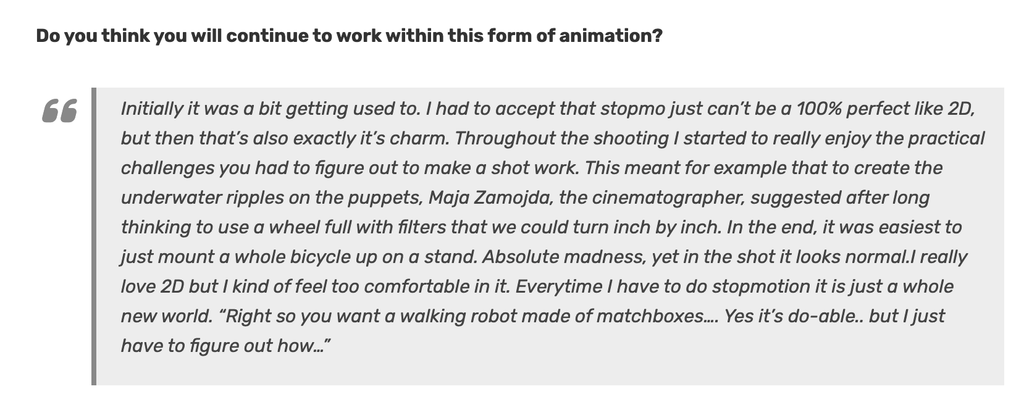
The section discussing the differences between 2D animation and stop motion in Playing Ghost. An interview with NFTS graduate Bianca Ansems
This is what I felt from my two stop-motion projects, LIAF and 1min. But these various practical problems are not all roadblocks to me. They are exciting, and I can learn things from other areas to build up my general skills.
So I’m interested in almost all jobs in the whole stop-motion making process. If I have to choose my favourite or what I do best, it is probably the animation part. I feel the happiest when the models start moving. Next is post-production. While making my 1-minute film, I learned to use professional editing software. I found they can make many surprising effects, which is really fun. But I haven’t practised much yet. I will see if I really like it and am good at it when I work on my final film.
She also said London has a high-level animation industry environment and more professional opportunities for new animators, which is consistent with my own study experience in the UK.
This secondary research lets me understand the unique difficulties of stop-motion freelancers, including funding pressure, limited shooting conditions and long pre-production cycles.
At present, I have basic stop-motion production skills and solid 2D animation knowledge. I also have the chance to contact the local animation community in London. However, I still have many shortcomings. I only have completed a complete stop-motion short film independently. I do not have my own shooting venue and equipment, and I have not formed my own stable animation style yet. I also know little about applying for project funding.
Based on these findings, I plan to find internships in stop-motion studios first to accumulate practical industry experience and solve the problem of insufficient shooting experience. After gaining enough professional skills and industry resources, I will consider becoming an independent freelance stop-motion animator in the future.
At the same time, I know I need to improve my English. This term, I’ve tried to talk in English with great animators I met in London and Brighton. But I still sometimes fail to understand parts of what they say, or struggle to express my ideas clearly right away. English communication is an important bridge for me to take in knowledge and share ideas here in the UK and in the future. So I need to make this bridge stronger and broader.